
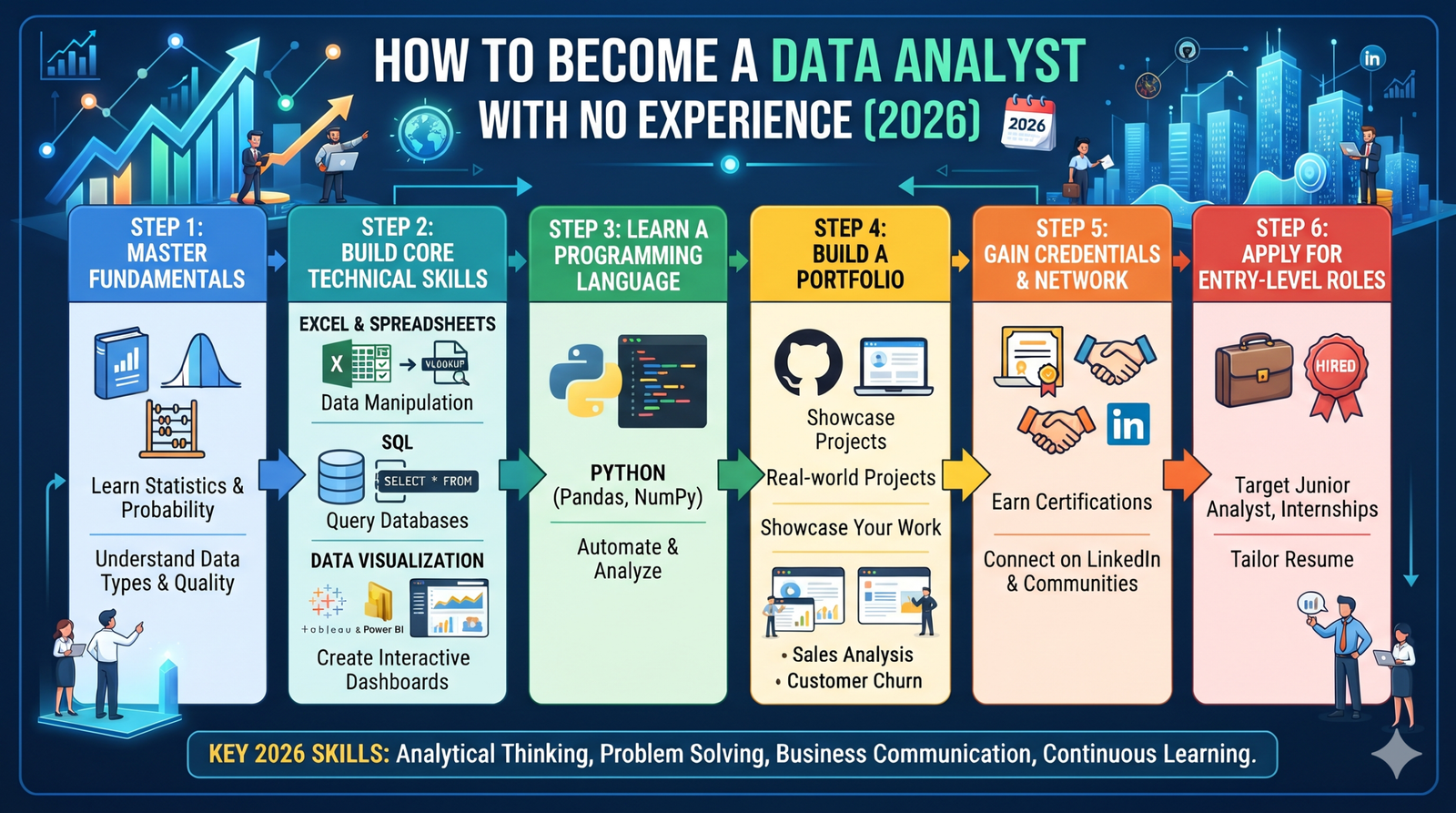
How to Become a Data Analyst With No Experience (2026)
The future of becoming a data analyst is very promising. It is required to get a degree or certification in analytics, science, or math stream. For learning, both options are available online and offline. Nowadays, there is a huge demand for data analysts in multiple sectors and government organizations as well.
Are you looking for a career in data analysis, or do you want to become a data analyst with zero experience? Or are you in a dilemma if it is possible? So, the answer is yes! Anyone who is eager to learn and explore data engineering or has an interest in data insights can become a data analyst with no prior experience. Rub your confusion with the eraser of career refinement.
A data analyst is a job role where an analyst turns raw data into insights. Today, where AI is spreading everywhere, employers are hiring particulars having technical and data-driven skills to employ with data analysis. Artificial intelligence made it simple. Let’s start the conversation with this blog, where we will learn how to become a data analyst with zero experience or no relevant degree
How to Become a Data Analyst
Steps to becoming a future-ready data analyst include:
Get Certified
Although having an official degree in computer science, maths or statistics can be beneficial, it can be extremely beneficial to have a specialised certification when looking for data analyst jobs. Many of these require practical tasks as part of the certificate, giving you real world experience in data analysis. If you wish to further your knowledge, a postgraduate diploma in data science could be a great option.
Create a Strong Portfolio
A strong portfolio is key to showing your skills and knowledge to potential employers.
There are many different open-source projects which require data analysis. Look for ways to get involved and take note of what process you went through. Make sure you write about what tools you used, how you solved any issues you faced and what conclusions you came to. This will show future employers how you approach problems. If you have a well organised portfolio with a variety of different projects you’ll stand out from other candidates.
Technical Skills:
To become a successful data analyst you must be able to develop a range of skills. Both technical and soft skills;
1.Programming Languages
2.Statistical Analysis
3.SQL
4.Excel
Soft Skills:
1.Critical Thinking
2.Communication
3.Attention to Detail
Stay Updated with Latest Trends
Keeping on top of the latest trends can help you to stay competitive. Having a good understanding of what is going on will allow you to adapt to changes quickly. Here are some ways to keep up with the latest trends:
- Read blogs and publications
- Attend webinars and conferences.
- Join online communities.
- Mock interviews
Now you’ve developed your skillset and portfolio its time to prepare for your job interviews. Here are some tips:
Look at common questions that come up during data analyst interviews. These could include SQL queries, statistical analysis questions and problem solving questions.
A lot of interviews will involve some form of technical test. This usually involves analysing a dataset or problem solving question. Practice these questions.
You will also be tested on your soft skills. Employers will often ask behavioural questions. Be prepared to talk about how you have dealt with challenges, worked in teams and communicated your findings in the past.
Also Read –Best Digital Marketing Classes with Certification
Benefits and Opportunities of Becoming a Data Analyst
There are many benefits and opportunities within becoming a data analyst. Below are just some of the benefits.
High demand:Data analysts are very highly demanded within many industries and retails. Many businesses are looking for skilled employees to help them make decisions.
Competitive salary:Due to the high demand and skills involved, many data analysts earn a competitive salary. Depending on where you live, what industry you are in and how much experience you have, you can earn a good salary.
Diverse Job Opportunities
As a data analyst there are a wide variety of jobs you can do, you can work for tech start ups, financial companies, health care and government. You can have a lot of flexibility within your career and find an area to specialise in that you are interested in.
Skills
By becoming a data analyst you will gain lots of valuable skills. You will gain knowledge in data visualisation tools, statistics and programming languages such as Python and R. These skills can be used in many different areas.
Problem solving
You will be solving complex problems and finding insights from data. This can be very rewarding and can provide you with a challenge.
Career progression
There are many opportunities for progression within this role. Once you have experience you can become a senior data analyst, data scientist or analytics manager.