
 Company Accountant
Company Account course prepares students build practical skills in accounting, taxation, payroll, financial records and business transactions. The program concentrates on commonly used accounting application and crucial workplace practices, making it useful for students and job seekers. The practical knowledge and proper training, a Company Accountant can manage financial tasks exactly and support the daily accounting needs of a business.
Course Curriculum
The Company Accountant Course Curriculum is prepared to provide practical knowledge of accounting, taxation, payroll, financial records and business transaction. It helps students understand the regular responsibilities managed by accountant.
The course curriculum generally covers the following important topics:
Basic Accounting Concepts
- Introduction to accounting
- Accounting principles and terminology
- Debit and credit concepts
- Journal entries and ledgers
- Trial balance and financial statements
Tally & Accounting Software
- Company creation and configuration
- Ledger and group creation
- Voucher entries
- Purchase and sales transactions
- Bank and cash management
- Inventory management
- GST-related accounting
GST & Taxation
- Basics of GST
- GST registration concepts
- Input and output tax
- GST invoices
- GST returns and reports
- Basic income tax concepts
Payroll Management
- Employee records
- Salary calculation
- Attendance and leave management
- Deductions and payroll reports
- Introduction to statutory deductions
Banking & Financial Transactions
- Bank reconciliation
- Cash book management
- Cheque and payment entries
- Receipts and expenses
- Financial transaction recording
MS Excel for Accounting
- Basic Excel functions
- Formulas and calculations
- Sorting and filtering
- Data management
- Accounting reports and spreadsheets
Practical Accounting Training
- Real-world accounting entries
- Preparing invoices and bills
- Maintaining financial records
- Generating accounting reports
- Practical exercises based on company transactions
This syllabus helps students to gain the accounting and software skills needed for day-to-day accounting work and entry-level accounting roles.
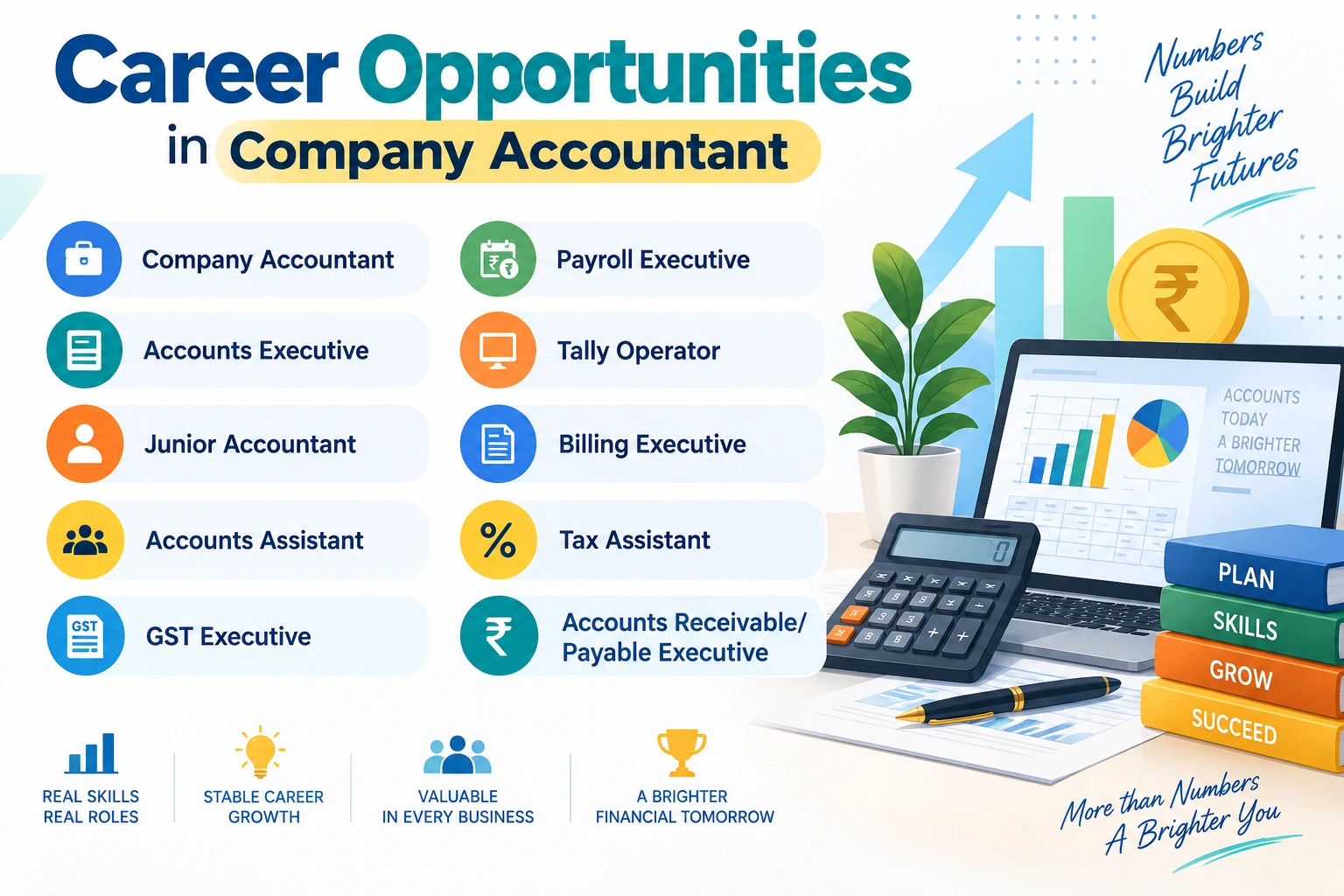
Career Opportunities
After Completing course, students can get into various accounting and finance jobs. Practical Knowledge of accounting software, taxation, payroll, GST and Excel can help students to prepare for positions in companies, accounting organisation, retail shops and other companies.
- Company Accountant
- Accounts Executive
- Junior Accountant
- Accounts Assistant
- GST Executive
- Payroll Executive
- Tally Operator
- Billing Executive
- Tax Assistant
- Accounts Receivable/Payable Executive
With experience and additional skills, learners can take on higher responsibilities in accounting, taxation, payroll, and financial management.
Why to Choose ITech Institute?
Choosing the right institute can help students develop practical accounting skills and prepare for workplace requirements.
Key reasons to choose ITech Computers for a Company Accountant course include:
- Practical Training – Learn accounting concepts through practical exercises and real-world examples.
- Expert Faculty – Learn from trainers who provide guidance on accounting and software-related topics.
- Accounting Software Training – Gain practical knowledge of commonly used accounting software and tools.
- GST & Taxation Knowledge – Understand GST, taxation basics, invoices, and accounting records.
- MS Excel Skills – Develop Excel skills useful for accounting reports, calculations, and data management.
- Job-Oriented Learning – Build skills relevant to accounting, billing, payroll, and finance-related roles.
- Placement Support – Get guidance and support to prepare for suitable job opportunities.
- Central Government Recognised – Learn through an institute offering Central Government-recognised courses and certification options.
- Career-Focused Approach – Develop practical skills that can support long-term growth in accounting and finance.
ITech Computers focuses on practical learning, industry-relevant training, and useful accounting tools.
Other Courses Offered by ITech Institute